Oral Lesion Worrying You? A Written Specialist Report Within 48 Hours
By MINA Dental Center · Medically reviewed by Dr. Mohammed Al-Jabiri, Consultant in Oral and Maxillofacial Pathology
If you've noticed a mouth sore, white or red patch, lump, or ulcer that hasn't healed in more than two weeks, the safest next step is to have it examined by a board-certified oral pathologist — in person, or remotely by sending clear photographs. MINA Dental Center's Oral Pathology service, led by Dr. Mohammed Al-Jabiri, reviews your case and delivers a written specialist report within 24–48 hours, so you know what you're dealing with and what to do next without waiting weeks for an appointment.
Most oral lesions are harmless — the result of minor trauma, a canker sore, or a passing viral infection — and resolve on their own within one to two weeks. A smaller number need a trained eye to rule out something more serious. The service described in this guide exists for exactly that in-between moment: when you're unsure which category your lesion falls into, and want a qualified answer quickly.
What Counts as a "Worrying" Oral Lesion?
Not every mouth sore needs specialist attention, but a handful of warning signs mean you shouldn't wait and see. The most important is simply duration: any ulcer, sore, red or white patch, or lump inside the mouth that persists beyond two weeks without improving has crossed the threshold where a dentist should examine it — this is the same "two-week rule" used internationally for oral mucosal lesions, because most benign sores (canker sores, minor trauma, viral ulcers) heal well within that window.
Beyond duration, pay attention to lesions that are painless rather than painful. Counterintuitively, a lesion that doesn't hurt is sometimes more concerning than one that does, because pain usually signals active irritation or infection that the body is already responding to, while some of the lesions that need the closest look cause no discomfort at all in their early stages. Other signals worth a specialist opinion include a lesion that is growing or changing in size, color, or texture; a white or red patch that won't wipe or rub off; unexplained numbness in the lip, tongue, or jaw; a lump that feels fixed to the tissue underneath rather than moving freely; and any lesion that bleeds without an obvious cause. Having one or more of these features doesn't mean something is seriously wrong — it means the lesion belongs in front of someone trained specifically in oral pathology rather than left to "wait and see" for another month.
How Long Should You Wait Before Seeing a Specialist?
As a working rule, two weeks is the right amount of time to give a minor lesion to heal on its own. If you bit your cheek, burned your mouth on hot food, or developed a typical canker sore, it should be visibly improving within seven to ten days and essentially gone by day fourteen. If instead the lesion looks the same, has grown, or new symptoms have appeared by that point, it has moved out of the "probably nothing" category and into the category that benefits from a professional look.
There is one exception to the two-week rule: lesions with any of the higher-risk features described above (painless, growing, fixed, bleeding without cause, or persistent numbness) deserve an earlier opinion even before the two weeks are up, simply because waiting adds no information in those cases and only delays a diagnosis you could have sooner. This is precisely why MINA built a fast, photo-based pathway alongside the traditional in-clinic visit — so that a mouth ulcer that won't heal doesn't have to mean waiting for the next available appointment slot.
What Happens During a Photo-Based Oral Pathology Evaluation?
The photo evaluation is designed for exactly this situation: a lesion that concerns you enough to want a specialist's eyes on it, but not necessarily an in-person visit on day one. You send clear photographs of the area — ideally in good natural light, from more than one angle — through the clinic's WhatsApp line. Dr. Al-Jabiri, MINA's Consultant in Oral and Maxillofacial Pathology, reviews the images against your brief description of when the lesion appeared, whether it's painful, and any relevant medical history, and prepares a written report.
Step | What happens | Typical timing |
|---|---|---|
1. Send photos | You send 2–4 clear photos of the lesion plus a short description via WhatsApp | A few minutes |
2. Clinical review | Dr. Al-Jabiri reviews the images and history against his training in oral and maxillofacial pathology | Within 24–48 hours |
3. Written report | You receive a written report describing likely findings, risk level, and recommended next step | Delivered same window |
4. Next step (if needed) | If the report recommends it, you book an in-clinic exam or a biopsy; otherwise you receive monitoring guidance | As advised |
The output is a written specialist report, not a verbal impression — something you can keep, share with another physician, or refer back to. For a lesion that turns out to need a closer look, the report will say so plainly and the recommended next step (an in-clinic exam, further imaging, or a biopsy) is explained in it.
In-Clinic, Photo, or Video — Which Option Is Right for You?
MINA offers three ways to have a lesion assessed by Dr. Al-Jabiri, and which one fits depends on where you are and how the lesion looks.
Option | Format | Best for | What you get |
|---|---|---|---|
In-clinic consultation | In person at MINA, Jazan | Anyone who can visit, or a lesion that needs a physical exam or biopsy | Full clinical exam, immediate discussion, biopsy if indicated |
Photo evaluation | Asynchronous, via WhatsApp photos | Patients outside Jazan, or anyone who wants a fast written opinion first | Written specialist report within 24–48 hours |
Video consultation | Live video call | Patients who want to describe symptoms and ask questions in real time without traveling | Live discussion with Dr. Al-Jabiri plus guidance on next steps |
None of these options is a substitute for an in-person biopsy when one is genuinely needed — rather, they're three different doors into the same specialist's judgment, so that distance or scheduling never becomes the reason a lesion goes unexamined. International and GCC patients who can't travel to Jazan immediately use the photo or video option as a first step, then travel for an in-clinic visit only if the report recommends it.
What Does a Written Specialist Report Include?
A written report from this service is built to be useful beyond a single reassurance — it's something you can act on or carry to another clinician. It typically covers what the lesion most likely represents based on its appearance and your history, how that likelihood was assessed, and what level of concern it warrants. It states clearly whether the findings are consistent with a benign, self-limiting process or whether they warrant closer evaluation, and if the latter, it specifies exactly what that next step should be — a follow-up photo in a set number of days to confirm healing, an in-clinic exam, or a biopsy to reach a definitive diagnosis.
Because oral mucosal disease spans a wide range of causes — traumatic, infectious (viral or fungal), autoimmune conditions such as oral lichen planus, and, less commonly, premalignant or malignant change — a written report from someone trained specifically in oral and maxillofacial pathology carries more diagnostic weight than a general impression. Dr. Al-Jabiri holds the American Board certification in Oral and Maxillofacial Pathology and completed a fellowship in the field in Florida, USA, in addition to his general dental training — this is a distinct specialty from general dentistry, built around exactly this kind of differential diagnosis.
Meet Dr. Mohammed Al-Jabiri — MINA's Oral Pathology Consultant
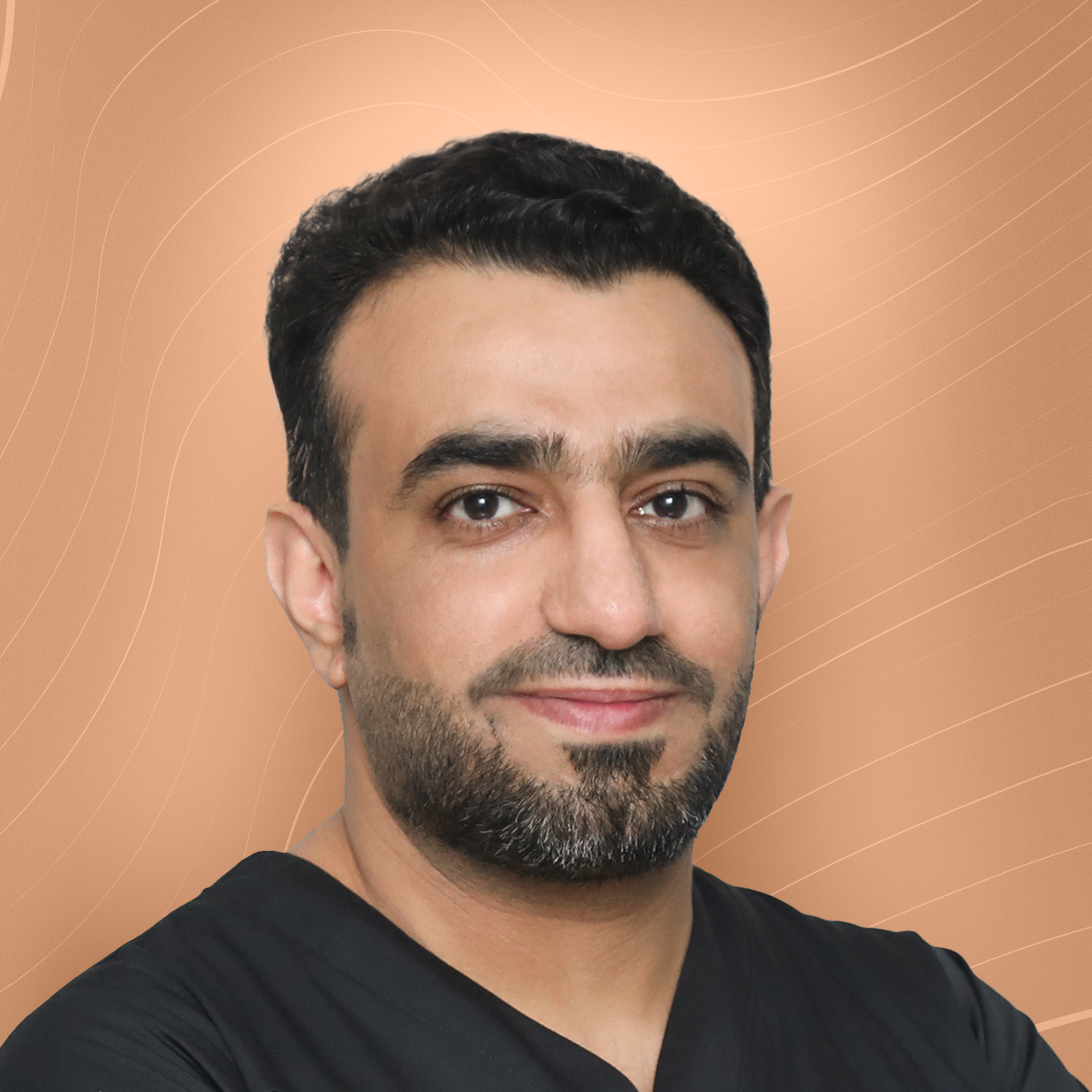
Dr. Mohammed Al-Jabiri (د. محمد الجابري)
Consultant in Oral and Maxillofacial Pathology
American Board certification in Oral and Maxillofacial Pathology
American Fellowship in Oral Pathology — Florida, USA
MS, New York University (NYU), USA
Assistant Professor, Department of Oral and Maxillofacial Surgery and Diagnostic Sciences, Jazan University
Dr. Al-Jabiri reviews every case submitted through MINA's oral pathology service personally — whether in the clinic, by photo, or by video — and is the medical reviewer for this article. View his full profile →
Why Choose MINA Dental Center for Oral Pathology Care?
Oral pathology is a narrow specialty, and MINA is one of the few clinics in the region with a dedicated consultant trained specifically in it rather than a general dentist offering a second opinion on the side. Dr. Al-Jabiri's American Board certification and fellowship training mean lesions are assessed against the same diagnostic framework used internationally, not a generalist impression. MINA Dental Center has served the Jazan community since 2016, with 15+ dentists (most of them consultants) and 520+ patient reviews, and the oral pathology service was built specifically so that distance, travel, or a full appointment book never becomes the reason a lesion goes unexamined for weeks. The clinic is open Saturday–Thursday, 10:00 AM – 10:00 PM, and closed Friday.
Patients who need to spread the cost of treatment can do so through Tabby or Tamara, both interest-free, SAMA-regulated buy-now-pay-later apps with instant in-app approval and no hidden fees — pricing itself stays simple: 230 SAR for the in-clinic consultation, 350 SAR for the photo evaluation and written report, and 500 SAR for the video consultation, the only three figures that apply to this service. (Prices shown are VAT-inclusive for international and non-Saudi residents; Saudi nationals are exempt from VAT on private healthcare treatment by Royal Order.)
Book Your Oral Pathology Evaluation
Recommended if you want a written specialist opinion within 24–48 hours.
Frequently Asked Questions
How do I know if my oral lesion is serious enough to see a specialist?
If it has lasted more than two weeks, is painless, is growing or changing, feels fixed to the tissue underneath, bleeds without a clear cause, or comes with numbness in the lip or tongue, it's worth a specialist opinion rather than waiting further. When in doubt, a photo evaluation gives you a fast, low-friction way to find out.
What exactly is a photo-based oral pathology evaluation, and how accurate is it?
You send clear photographs of the lesion along with a short history to Dr. Al-Jabiri, MINA's board-certified oral pathology consultant, who reviews them and prepares a written report. It's a genuine clinical assessment by a specialist, not an automated tool — its accuracy depends on photo quality, which is why the service asks for several angles in good lighting. It's not a replacement for a biopsy when one is needed, but it is an accurate and fast way to know whether you need one.
How fast will I receive my written report?
Within 24–48 hours of sending your photos and history.
Can international or GCC patients use this service without traveling to Jazan?
Yes. The photo and video consultation options were built specifically so that patients outside Jazan — elsewhere in Saudi Arabia, the GCC, or abroad — can get a specialist opinion first and only travel for an in-clinic visit if the report recommends it.
What happens if the report recommends an in-person visit or a biopsy?
The written report will say so clearly and explain why, and MINA's team will help you book the in-clinic consultation. A biopsy is the only way to reach a definitive diagnosis for some lesions, and the report exists to tell you plainly when that step is the right one — not to replace it.
How much does each option cost?
230 SAR for an in-clinic consultation, 350 SAR for the photo evaluation with written report, and 500 SAR for a live video consultation. Prices are VAT-inclusive for non-Saudi residents; Saudi nationals do not pay VAT on private healthcare treatment, by Royal Order.


